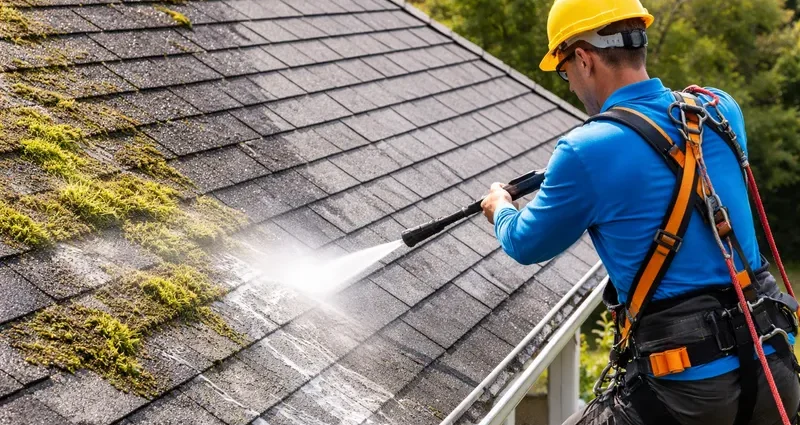
Your roof protects everything inside your home, yet many homeowners forget to take care of it. Over time, dirt, algae, moss, and debris can build up and cause damage. That’s where Roof Cleaning becomes essential. It not only improves the look of your home but also extends the life of your roof.
Regular Roof Cleaning helps prevent costly repairs. When you remove harmful buildup early, you protect your shingles and avoid structural issues. In this guide, you will learn safe and effective methods to clean your roof the right way.
What Is Roof Cleaning and Why Does It Matter
Roof cleaning means removing dirt, moss, algae, and stains from your roof surface. These elements may seem harmless at first, but they can weaken roofing materials over time.
Here’s why it matters:
- Prevents damage caused by moisture and algae
- Improves your home’s curb appeal
- Extends the lifespan of your roof
- Helps maintain energy efficiency
A clean roof reflects sunlight better and keeps your home cooler. Ignoring it can lead to expensive repairs or even early roof replacement.
Roof Cleaning Methods You Should Know
Roof Cleaning Methods Explained
Different roofs require different cleaning techniques. Choosing the right method is key to avoiding damage.
1. Soft Washing
Soft washing uses low-pressure water combined with cleaning solutions. This method works best for delicate materials like shingles.
- Safe for most roof types
- Removes algae and bacteria
- Long-lasting results
2. Pressure Washing
Pressure washing uses high-pressure water to remove dirt and debris.
- Works well on metal or concrete roofs
- Not suitable for asphalt shingles
- Can cause damage if used incorrectly
3. Chemical Cleaning
This method involves applying cleaning solutions to break down stains and organic growth.
- Effective for stubborn stains
- Requires proper handling
- Needs rinsing after application
Each method serves a purpose. Always match the technique with your roof type for the best results.
Tools and Materials for Roof Cleaning
Before starting, gather the right tools. Using proper equipment makes the job safer and more efficient.
Essential Tools:
- Garden hose or pressure washer
- Soft-bristle brush
- Cleaning solution or roof cleaner
- Safety harness
- Ladder with stabilizer
Cleaning Solutions:
You can use store-bought cleaners or make a simple solution with water and mild detergent. Avoid harsh chemicals that can damage roofing materials.
Step-by-Step Roof Cleaning Process
Follow these steps for a safe and effective cleaning process:
Step 1: Inspect Your Roof
Check for damage before you start. Look for loose shingles or cracks.
Step 2: Remove Debris
Clear leaves, branches, and dirt using a brush or blower.
Step 3: Apply Cleaning Solution
Spray the solution evenly across the roof. Let it sit for 15–20 minutes.
Step 4: Gently Scrub or Rinse
Use a soft brush or low-pressure water to clean the surface.
Step 5: Rinse Thoroughly
Make sure no residue remains. Leftover chemicals can harm your roof.
Step 6: Let It Dry
Allow your roof to air dry completely before inspecting the results.
This process ensures effective Roof Cleaning without causing damage.
Safety Tips for Effective Roof Cleaning
Cleaning a roof can be risky. Always prioritize safety.
- Wear non-slip shoes
- Use a safety harness when needed
- Avoid working on wet or slippery surfaces
- Never work alone
- Use a stable ladder
Taking these precautions reduces the risk of accidents and injuries.
Common Mistakes to Avoid
Many homeowners make simple mistakes that lead to damage.
Avoid These Errors:
- Using high pressure on delicate roofs
- Ignoring safety equipment
- Using harsh chemicals
- Skipping regular maintenance
Another common mistake is rushing the process. Take your time to ensure proper Roof Cleaning results.
How Often Should You Clean Your Roof?
The frequency depends on your environment.
- Every 1–2 years for most homes
- More often in humid or wooded areas
- After heavy storms or debris buildup
Regular inspections help you decide when cleaning is necessary.
DIY vs. Professional Roof Cleaning
You can clean your roof yourself, but hiring professionals has benefits.
DIY Cleaning:
- Saves money
- Requires time and effort
- Comes with safety risks
Professional Cleaning:
- Safer and faster
- Uses advanced tools
- Provides long-lasting results
If your roof is steep or heavily stained, hiring experts is often the better choice.
Conclusion
Taking care of your roof is not optional—it’s essential. With proper Roof Cleaning, you can protect your home, improve its appearance, and avoid costly repairs. By following safe methods and using the right tools, you ensure your roof stays strong and durable for years to come. For more information, visit our website.